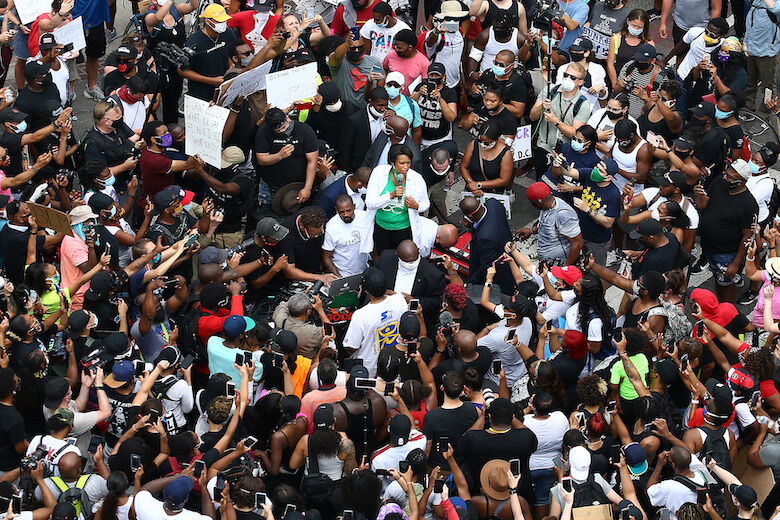
Do we judge people by the color of their skin? Any color – for whatever reason.
Not just while arresting a suspect or on a trial jury, but in the classroom, the workplace, on social media, while getting coffee, out on the street – with our pre-attitudes, biased decisions and dispositions? This is where to begin.
Racism can derive from animus, ignorance, and anything in between. It’s institutional when it persists without justice. The protests are about so much more.
You don’t know what it means unless you’ve been followed or stopped while running at night; until you’ve been suspected – or not entitled to something – simply because you are who you are – expected to be something negative by association without cause.
Pull back even further: There’s too much indifference to all forms of hate. Period.
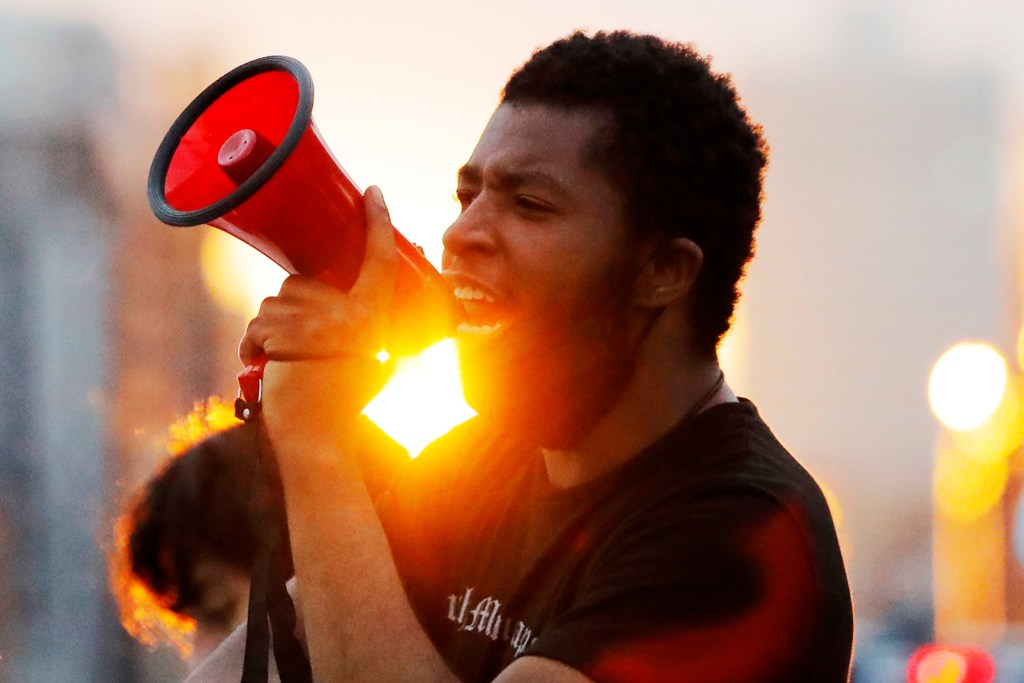
The Real Root Cause
Police brutality isn’t just about racism. It’s about America’s addiction to violence.
We consume brutality like entertainment—Game of Thrones fans marching against police violence. Violence saturates our culture more than anywhere else on earth. Meanwhile, human slavery hits record highs globally, run by Chinese and Russian networks. We’re drowning in indifference to all forms of hate.
The Data Cuts Both Ways
The uncomfortable truth: Police killed 1,004 civilians in 2019. Of 802 cases with racial differences between officer and victim, most suspects were armed. Only 10 clear cases involved unarmed black victims killed by non-black officers.
The other uncomfortable truth: White Americans, especially poor ones, also die at alarming rates. Rural America sees rising police killings while big cities see declines.
The damning evidence: Violent crime rates don’t predict police violence. Buffalo (0 deaths 2013-16) has higher crime and black population percentage than Orlando (13 deaths same period). No excuses left.
Minnesota Proves the Point
Even “liberal” Minnesota shows massive racial wealth gaps, health disparities, education failures. Systemic inequality thrives everywhere, masked by good intentions.
The data is clear: over-incarceration of African Americans stems from policies both parties created. Democrats invented the prison-industrial complex, then spent decades pointing fingers. Even eight years of a black president with congressional support changed little.
What Actually Works
Public opinion shifted dramatically—57% now believe police use excessive force against African Americans (up from 33% in 2014). Change happens fast when people see truth.
But data poverty cripples progress. We lack transparency, baselines, agreed metrics. We know racism varies by location: Georgia, Oklahoma, New Mexico worst. Specific cities: Reno, Oklahoma City, Santa Ana, St. Louis.
The Philosophy Problem
Strip away race for a moment. How do you provide just law enforcement in a democratic society flooded with guns, drugs, and instability?
Your view on discipline, confrontation, and authority shapes everything. Someone raised in military/law enforcement culture sees order differently than someone who grew up questioning authority. Both views have validity and blind spots.
The Leadership Vacuum
Solutions exist. Former Philadelphia police commissioner: “The problem isn’t lacking a playbook for fixing police. We have one. We haven’t followed it.”
Political common ground exists on reform. What’s missing? Leaders willing to take the first move, risk appearing weak, own their history.
Bottom Line
Brutality is an American problem. Racism is a human problem.
Real change requires:
- Full justice in every case (best deterrent)
- Monitoring at point of engagement
- Community investment over incarceration
- Criminal justice reform targeting that 1,004 annual death toll
- Inner-city communities working with police
- Less tension, more transparency
The Choice
Rev. King: “We may have come on different ships, but we’re in the same boat now.”
Howard Thurman: “To revile because one has been reviled—this is the real evil it is the evil of the soul itself.…We must welcome the image of God in every person; and shake off the hounds of hell biting at our ankles…
Every day, in your heart, you choose: demand what’s right even if you don’t benefit, or stay indifferent.
The key isn’t leaders, history, or economics blocking progress.
The key is our own indifference.
America can achieve true equality—not despite its plurality and passion, but because of it.
The question: Will we?
KJS / 7 June 2020 Washington DC USA
 whatever because