An open letter from a budding culinary professional on the responsibility we have to those we feed
Dear Ms. Ray,
I’m writing to you as a young chef in training, someone who grew up watching your 30-minute meals and learning from your infectious enthusiasm for cooking. That’s why your recent opposition to California’s SB 682—the bill banning PFAS “forever chemicals” in non-stick cookware—has left me both disappointed and deeply concerned.
The Science Memo You “Didn’t Get”
In your letter to California lawmakers, you stated that PTFE is “proven to be safe and effective” when used responsibly. But the science tells a dramatically different story—one that every chef feeding families should know.
The microplastics crisis is real and immediate. Recent studies show that cutting carrots on a plastic cutting board generates 15 milligrams of microplastics per cut—equivalent to consuming ten plastic credit cards worth of particles per year. Scientists have found microplastics in human tissue throughout the body, including the lungs and stomach, with exposure linked to doubled risk of heart attacks and strokes among people with cardiovascular disease.
Studies on mice show microplastic exposure disrupts gut biomes, lowers sperm quality and testosterone levels, and impairs learning and memory. These particles are so small—often under 10 micrometers—that they can penetrate the placental barrier, potentially exposing fetuses during pregnancy.
When it comes to PFAS specifically, environmental groups note that as pans wear down, their coating degrades into PFAS-laden microplastics, which researchers have detected in human urine and semen. When overheated, PTFE releases fumes so toxic that manufacturers warn pet owners not to keep birds in the kitchen—these same fumes can cause “Teflon flu” in humans, with hundreds of cases reported annually.
Following the Tobacco Playbook
Your position becomes even more troubling when we examine who’s funding it. Your statements were compiled and shared by The Cookware Sustainability Alliance, an organization founded by two of the largest cookware producers in the world, Groupe SEB and Meyer Corporation. This alliance has spent $70,000 lobbying in 2025 alone, and has worked with groups like the California Chamber of Commerce, the American Chemistry Council, and the California Manufacturing and Technology Association to oppose PFAS restrictions.
The tactics being employed are disturbingly familiar. Research from UC San Francisco examining previously secret industry documents shows that chemical companies used the same strategies as Big Tobacco: suppressing unfavorable research, distorting public discourse, and delaying regulation while knowing their products caused harm.
DuPont knew by 1970 that PFAS were “highly toxic when inhaled and moderately toxic when ingested,” yet told employees the chemicals were “about as toxic as table salt.” Internal studies from the early 1980s found elevated liver enzymes in 60% of tested workers and documented birth defects among pregnant plant employees, yet the company publicly claimed “no known toxic or ill health effects.”
Even ExxonMobil’s senior federal relations director was caught on tape admitting the company lobbies “under the guise” of trade associations to avoid public association with forever chemicals, using “delay, deny and distract” tactics identical to those used against climate action.
Uncomfortable Truth About Influence
Ms. Ray, I want to believe your opposition stems from genuine concern rather than financial influence. But the pattern is too clear to ignore. The American Chemistry Council alone spent $58.7 million lobbying on PFAS issues, while the Forever Lobbying Project revealed that hundreds of industry players are spending unprecedented amounts—making “the work of other politically active industries, like Big Tobacco, look small-time in comparison.”
You’re part of an industry campaign that relies “heavily upon spin, industry-funded science and studies, scaremongering, and some unsubstantiated claims”—the exact playbook used to delay tobacco regulation for decades while millions suffered.
What We Owe The People We Feed
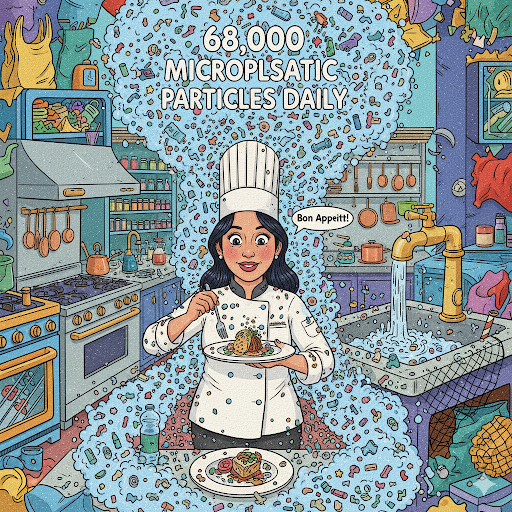
As chefs, we have a sacred responsibility to nourish, not harm. When you tell families that non-stick cookware is safe while scientists are finding microplastics accumulating in human brains and people may be breathing in 68,000 microplastic particles daily from indoor air alone, you’re not protecting their access to convenient cooking—you’re protecting corporate profits at the expense of public health.
Ironically, even your own brand recently launched a ceramic non-stick line “made without forever chemicals” as an alternative to traditional PTFE non-stick. If PTFE is truly as safe as you claim, why develop alternatives at all?
The Cost of Inaction
The stakes couldn’t be higher. European researchers calculate that cleaning up PFAS contamination could cost €2 trillion over 20 years—€100 billion annually—if these chemicals remain unrestricted. Minnesota’s “Amara’s Law,” named after 20-year-old Amara Strande who died from rare liver cancer linked to PFAS exposure near a 3M plant, reminds us that behind every statistic is a human life.
A Different Path Forward
Ms. Ray, you have the platform to be a force for good. Actor Mark Ruffalo urged you to support California’s PFAS bill “from the bottom of my heart,” noting that “independent science shows that the PFAS in cookware can wind up in our food.” The Environmental Working Group echoed this call, stating that “Californians deserve cookware that’s genuinely safe, not coated with chemicals tied to cancer, hormone disruption, developmental damage and weakened immunity.”
You could use your influence to demand transparency, support research into safer alternatives, and advocate for the families who trust you with their health. Instead, you’ve become a spokesperson for an industry with a documented history of deception.
The Choice Is Still Yours
I’m not asking you to abandon non-stick cookware entirely. I’m asking you to stop carrying water for companies that have repeatedly prioritized profits over people. California’s bill passed with a 41-19 vote, showing that when legislators examine the science objectively, the choice becomes clear.
The next generation of chefs—my generation—is watching. We’re learning not just how to cook, but how to navigate an industry where celebrity endorsements can determine whether families are exposed to harmful chemicals. We’re deciding what kind of food professionals we want to be.
Will we be the chefs who stood up for public health when it mattered? Or will we be remembered as those who chose convenience and corporate partnerships over the wellbeing of the people we’re meant to nourish?
The choice is still yours, Ms. Ray. But the science is clear, the industry tactics are exposed, and every day of delay means more families exposed to chemicals that could be harming their health.
It’s time to put down the industry talking points and pick up the mantle of responsibility that comes with feeding America.
Respectfully disappointed,
Future Chefs Who Expect Better
—–
*The author is a culinary student because they believe cooking should nourish our bodies, not poison them. This letter represents their personal views. This is dedicated to the commitment of those at odds with the food and chemical industrial forces only because we are trying to ensure what we are fed is good for us and the earth.
 whatever because