🃏Washington DC 10.25
Jonathan Rinderknecht listened to a French rap song called “Un Zder, Un The” nine times in the four days before he allegedly set the Palisades fire. The music video shows a trash can being lit on fire. The theme of the song is one of despair and bitterness. He had generated an image on ChatGPT depicting a burning city.
Tyler Robinson assassinated Charlie Kirk after leaving a note for his roommate: “I had the opportunity to take out Charlie Kirk and I’m going to take it.” When asked why, he said: “I had enough of his hatred. Some hate can’t be negotiated out.”
Two different men. Two different targets. Two completely different political resonances. Yet the profiles look eerily similar: young men steeped in irony, memes, video games, and digital nihilism. These are not ideologues. They are what we must now call the Joker Boys—and they represent the most dangerous domestic threat America has ever faced, primarily because we can’t stop fighting with ourselves long enough to even see them.
The Psychology of Annihilation
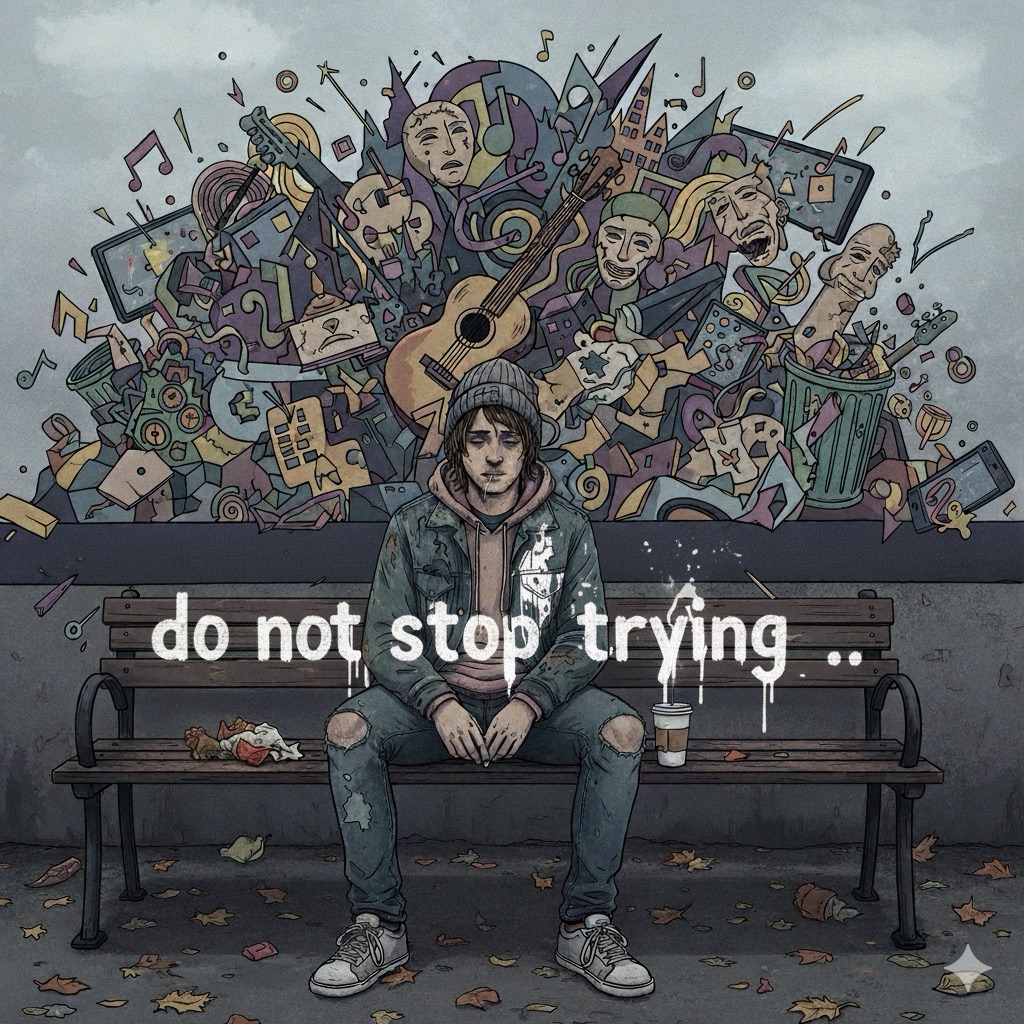
The “doomer” phenomenon emerged on internet forums in the late 2010s, initially as dark humor about societal collapse. The archetype—a disheveled young man in a beanie, smoking a cigarette, embodying resignation and defeat—became the mascot for a generation that had “simply stopped trying.”
But something darker has metastasized. Research shows that ideological nihilism, or the acceptance of apocalyptic and suicidal thinking, has resulted in a recent rise of violence across the globe. These individuals don’t subscribe to a single ideology. Their overexposure to violent and extreme content causes them to accept niche radical beliefs that transcend the political spectrum.
The Highland Park shooter. The Uvalde school shooter. The Nashville AT&T bomber. Investigators couldn’t determine clear ideological motives. Yet all spent considerable time online and developed esoteric beliefs absorbed from dark corners of social media.
This is learned helplessness on a civilizational scale. Psychologist Martin Seligman demonstrated how repeated exposure to negative events makes people believe they’re powerless to change their circumstances. When you combine this with what researchers call “defensive pessimism”—accepting that everything is doomed as psychological protection against disappointment—you create a perfect storm.
These young men have concluded that since everything is meaningless and collapse inevitable, destruction itself becomes the only authentic act available.
The Digital Incubator
Pre-teens spend about five and a half hours in front of screens daily. Teenagers spend about eight and a half hours online. Most of this time is on social media platforms that algorithmically surface the most extreme, emotionally provocative content.
They’re not turning to Google for verified information anymore—they’re using TikTok as a search engine, getting crowdsourced information that’s often misexplained, misunderstood, and reshared without verification. Whether learning about geopolitics, climate change, or vaccines, they’re absorbing a worldview mediated entirely through viral content optimized for engagement, not truth.
The implications are damning. Because nihilists view personal, social, and political issues as inescapable, they regard norms, traditions, values, and actions as obstacles rather than solutions. When every problem appears unsolvable and every institution appears corrupt, annihilation becomes philosophically justifiable.
Ironically, doomerism provides strange comfort. Accepting that “everything is doomed” relieves the pressure to change things. It becomes easier to disengage, avoid responsibility, and justify inaction—or action of the most destructive kind.
The Joker Metaphor
The Joker is the original nihilistic boy. His crimes are theater. His philosophy is chaos. He doesn’t want to win—he wants everyone to lose. That’s what makes him seductive to alienated young men online. He isn’t a politician or a general. He’s a performer of despair.
In meme form, the Joker is everywhere: “we live in a society,” the darkly comic mascot of incels, edgelords, and doomposters. The shooters aren’t cosplaying Joker, but they’re cut from his cloth. Their crimes are as much spectacle as slaughter. Their lives are as empty of ideology as his.
Rinderknecht generated AI images of burning cities before setting a real fire that killed twelve people and destroyed thousands of homes. Robinson left cryptic notes and messages designed as much for online audiences as explanations. These are performative crimes, designed to resonate in the digital spaces where meaning has been replaced by spectacle.
Here’s the terrifying part: you can negotiate with ideologues. You can address grievances. You can reform systems. But how do you negotiate with someone who believes the only authentic act is destruction?
How do you reform institutions for people who see all institutions as equally corrupt and worthless?
The Generational Fracture
These young men grew up witnessing: The 2008 financial crisis that destroyed their parents’ economic security. Endless wars with no clear purpose or victory. Climate collapse accelerating while adults argued about whether it’s real. School shootings becoming routine. A pandemic that revealed institutional incompetence. Politicians who promised change delivering only chaos.
They were told happiness matters more than money, then told to be grateful for minimum wage jobs requiring college degrees their parents didn’t need. They watched Boomers who preached hard work retire comfortably after buying houses on single incomes while they can’t afford rent on two.
The Doomer generation sees this clearly: they’ve been sold a broken future by people who profited from breaking it.
But clarity without agency breeds something darker than activism. It breeds annihilationalism—the belief that since you can’t fix what’s broken, you might as well burn it down. Since meaning can’t be found, create spectacle. Since hope is a lie, embrace despair as the only honest philosophy.
The Warning Signs We’re Ignoring
A study of over one million forum posts found rising support for rape, mass killings, and violence against gender minorities. Many posters espoused similar ideologies—casting blame on women, minorities, institutions, and society itself for their failures.
These aren’t fringe beliefs anymore. They’re normalized in spaces where millions of young men spend hours daily. The line between dark humor, ironic detachment, and genuine nihilistic violence has dissolved.
The warning signs are everywhere. We’re just not looking at them correctly because we’re too busy fighting about whether these acts represent left-wing or right-wing violence. They represent neither. They represent post-political annihilation—violence beyond ideology, performed by young men who see all ideologies as equally worthless.
The Mental Health Crisis
COVID-19 didn’t create this crisis—it accelerated it. Isolation, economic devastation, institutional collapse, and the stripping away of any remaining illusions about societal stability pushed many young men over the edge.
But the crisis predates the pandemic. It’s rooted in economic inequality that’s made traditional markers of adulthood—home ownership, financial security, family formation—impossible for millions. It’s reinforced by political dysfunction that makes change feel impossible regardless of who’s in power. It’s amplified by technology that monetizes despair and algorithmically surfaces the most extreme content.
This isn’t mental illness in the traditional sense. It’s a rational response to genuinely irrational conditions. That’s what makes it so dangerous. These young men aren’t crazy. They’re responding logically to a world that appears designed to crush them.
What We Owe Them
The answer isn’t more surveillance or more security theater. The Joker Boys aren’t organized terrorists you can infiltrate. They’re individuals acting alone, connected only by shared digital spaces and worldviews.
The answer is hope. Genuine, material, actionable hope.
We need economic policies that make traditional adulthood achievable—where working hard actually leads to security rather than barely scraping by. We need climate policies that demonstrate adults are finally taking the crisis seriously. We need political reforms that prove change is possible through legitimate channels. We need mental health infrastructure that reaches young men before nihilism becomes violence.
Most importantly, we need to give them agency. The core of doomerism is powerlessness—the belief that nothing you do matters, that all institutions are corrupt, that change is impossible.
Prove them wrong. Give them genuine opportunities to affect outcomes. Show them that democratic participation works. Demonstrate that their voices matter and their actions can create change.
Because right now, we’re validating their worldview. Political dysfunction proves institutions don’t work. Economic inequality proves hard work doesn’t pay. Climate inaction proves adults don’t care about their future. And our inability to even recognize the Joker Boys as a distinct threat proves we’re too busy fighting each other to address real dangers.
Patriotism Redefined
Real patriotism means caring enough about your country’s future to invest in the generation inheriting it. It means building systems that work for young people instead of extracting from them. It means creating legitimate pathways to dignity, security, and meaning.
Their violence is the rage of betrayed idealism turned inward and outward simultaneously. We can save them. But only if we’re willing to rebuild the social contract that’s been systematically destroyed over the past forty years. Only if we’re willing to prioritize their future over our present comfort. Only if we’re willing to create genuine reasons for hope instead of selling them more empty promises.
Cannot Ignore
Jonathan Rinderknecht and Tyler Robinson are early indicators of a much larger phenomenon. The conditions creating Joker Boys aren’t improving—they’re intensifying. Economic inequality is growing. Climate collapse is accelerating. Political dysfunction is deepening. And millions of young men are spending hours daily in digital spaces that algorithmically surface the most nihilistic content.
We can continue ignoring this until violence becomes so common we stop noticing. We can keep fighting about whether these attacks represent left or right-wing terrorism while missing the deeper truth that they represent post-political annihilation.
Or we can recognize this as the civilizational crisis it is. We can rebuild systems that create genuine opportunity. We can reform institutions so they actually serve the next generation. We can create legitimate reasons for hope instead of expecting young people to maintain optimism in objectively hopeless conditions.
The Joker Boys are showing us what happens when an entire generation concludes that destruction is the only honest response to a broken world.
Are we paying attention? Do we care enough to prove them wrong?
Right now, we’re losing them. And once they’re lost to that darkness, there’s no negotiating them back.
KJS 10.25
- “Generation Doomer: How Nihilism on Social Media is Creating a New Generation of Extremists” – GNET Research
- “The Rise of the Joker Boys” by Alisa Valdes-Rodriguez (Substack)
- “Understanding Doomerism: Psychology, the Climate Crisis, and Economic Inequality” – Honeysuckle Magazine
- “What is Doomerism and 3 Ways to Break Its Control” – PsychUniverse
- “Doomer” Wikipedia
- “Understanding Doomers: The Psychology and Origins of a Bleak Subculture” – Mole Empire
 whatever because