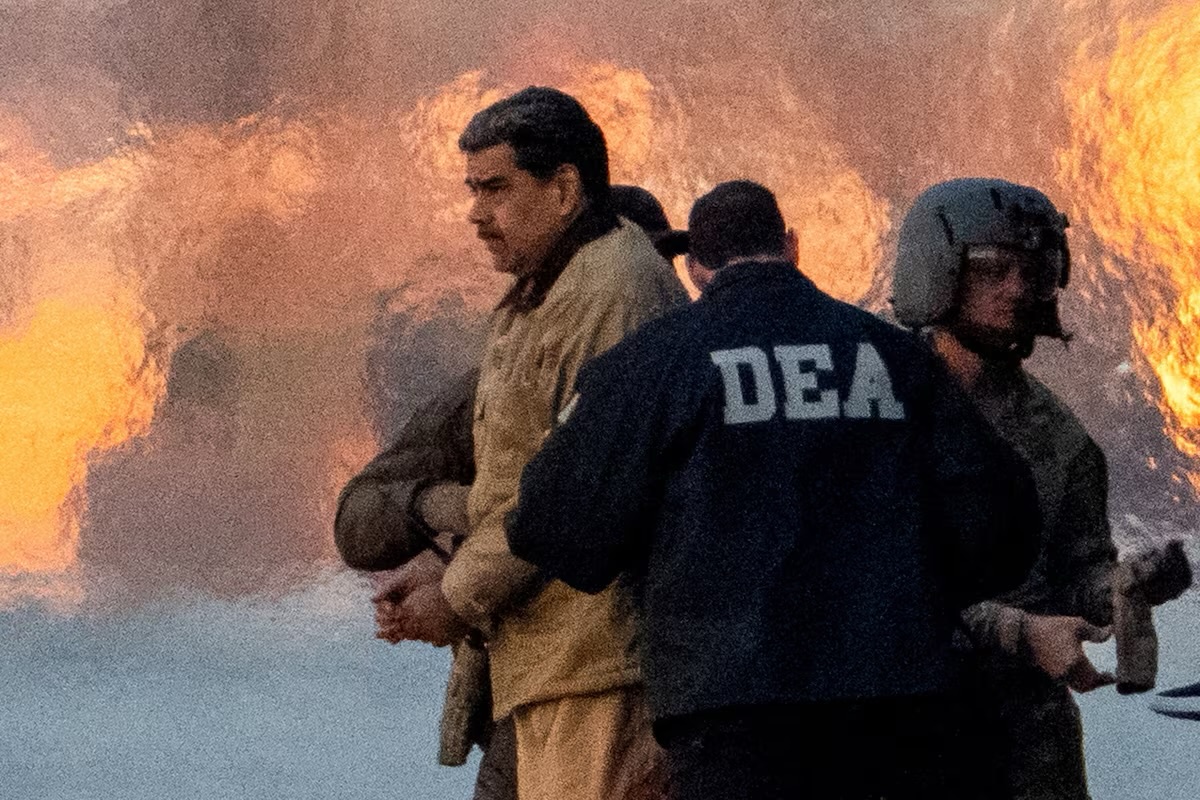
Constitution update: The State (we all want and deserve) is designed to help citizens prosper and stay equal and free; is to be governed by the people’s rights and the interests of the future; with governance designed to keep it in check and truth to guide the way.
I’m writing from Washington DC, where the think tank world is starting to justify strongman governance as “resilient.”
Middle finger.
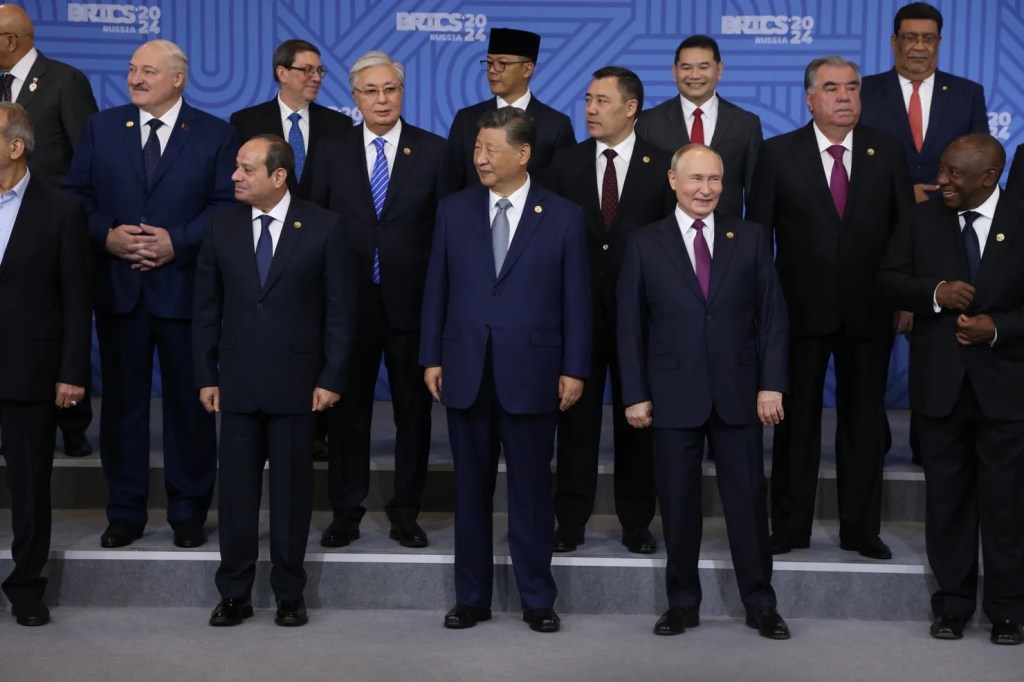
In today’s Bloomberg Opinion they argue that Putin, Xi, Erdoğan, Modi—and now Trump—have cracked some code that makes authoritarian rule durable. Where serious analysts claim these leaders aren’t brittle but adaptable, that their fortress economies and surveillance states represent the future of stable governance.
I’m alarmed. Not because the analysis might be accurate about their short-term durability. But because when institutions inside the Beltway start intellectualizing tyranny as effective, we’re participating in its normalization.
So let me respond from the grassroots, from history, from the streets where power actually lives.
Every Strongman Thinks They’re Different
The Shah of Iran controlled everything—secret police, oil wealth, Western military backing. “Too big to fail,” they said. Until 1979, when millions of ordinary Iranians simply refused to comply. The military, faced with shooting protesters or joining them, chose the people.
Ferdinand Marcos ruled the Philippines for 21 years with martial law, US support, and complete institutional capture. Economists praised his “stability.” Then in 1986, two million people showed up on EDSA. The military defected. Four days later, he fled.
The Soviet Union—the ultimate surveillance state, nuclear superpower, fortress economy decoupled from the West. Every Western think tank in the eighties predicted its permanence. Gorbachev himself tried to reform it, not replace it. But once people in Poland, then East Germany, then across the Eastern Bloc decided they were done, no amount of military hardware or institutional control mattered. The whole apparatus collapsed in months.
The pattern is clear, they know it and it’s what they fear most: Strongmen don’t fall from institutional weakness. They fall when people collectively withdraw consent.
What “Analysts” Miss About Power
The Bloomberg analysis is partially correct: These regimes are adapting. They use modern surveillance, manipulate nationalism, crush opposition early, build alternative economic networks. This makes them durable against institutional challenges—coups, economic sanctions, diplomatic isolation.
But institutions don’t topple tyrants. People do.
And people power operates on different physics than institutional analysis. It’s not about GDP growth rates or SWIFT payment systems or whether the military has modern equipment. It’s about the moment when enough humans simultaneously decide: We’re not doing this anymore.
That moment is unpredictable. You can’t model it. You can’t see it coming. It lives in whispered conversations, in parents deciding what future they’ll accept for their children, in the tally of small humiliations that then become intolerable.
The Technology
Yes, modern surveillance makes coordination harder. China’s social credit system, Russia’s internet controls, algorithmic suppression of dissent—these are real obstacles.
Technology cuts both ways. The same phones that surveil also organize. The same platforms that censor also leak information. Every authoritarian state discovers this: You can’t run a modern economy without connectivity, and connectivity is inherently subversive.
Iran’s regime knows this. That’s why they keep shutting down the internet during protests, crippling their own economy in the process. That’s why China spends more on internal security than external defense. They’re not confident. They’re terrified.
And they should be. Because the toolkit of resistance has evolved too: encrypted communications, decentralized organizing, mesh networks, coordinated economic boycotts, strategic noncooperation.
America’s Time
We’re watching Trump attempt the same playbook: capture the courts, weaponize federal agencies, freeze funding to punish political opponents, seize assets for personal gain, withdraw from international cooperation, normalize rule by decree.
The question isn’t whether courts will save us—they won’t, not when they’re captured. The question is whether Americans will do what Iranians, Filipinos, Poles, and East Germans did: collectively refuse to comply.
That looks like:
Economic noncooperation: Don’t shop at complicit retailers. Don’t bank with institutions enabling corruption. Don’t work for companies profiting from authoritarianism. Money is oxygen for these regimes.
Strategic boycotts: For example, when a president seizes golf courses for personal profit, those courses become economically toxic. Make them so. Coordinate. Make corruption unprofitable.
Judicial pressure from below: Courts respond to public pressure more than we admit. When millions show up, when economic consequences become real, when local officials face constituency revolt—judges notice. Flood every corrupt action with lawsuits. Make the cost of defending tyranny unbearable.
Local resistance: Governors, mayors, county officials—they control implementation. A federal order means nothing if locals refuse to enforce it. Build coalitions of defiant local governments. This is how civil rights advanced when federal government resisted.
Labor action: If workers refuse to implement unjust orders, those orders fail. A coordinated work stoppage by federal employees enforcing tyranny would collapse enforcement overnight.
Unity Imperative
This is where strongmen are genuinely brittle: They require division. Their power depends on keeping opposition fragmented—left vs. right, urban vs. rural, race vs. race, class vs. class.
When people unify around basic principles—rule of law, freedom from arbitrary power, protection from government theft, fair elections—the strongman playbook fails. Because surveillance can’t stop millions. Military defects when ordered to shoot crowds. Economic networks collapse when everyone stops participating.
The Shah learned this. Marcos learned this. The Soviets learned this.
Global Stakes
This isn’t just about America. The think tanks are right that we’re in a moment of global strongman emergence. But they’re catastrophically wrong about the endpoint.
These regimes aren’t the future. They’re the last spasm of a dying order. Because the fundamental equation hasn’t changed: Governments derive legitimacy from consent. Remove consent, and all the surveillance technology and fortress economics in the world become irrelevant.
What happens in Iran right now matters. How that regime responds to mass defiance will teach us—and teach them—whether adaptation can overcome withdrawal of consent.
What happens in America matters right now even more. Because if the world’s oldest continuous democracy can demonstrate that people power still works, that strongmen are still brittle when enough humans say no—that changes everything.
Rally
Here’s the message to every think tank normalizing tyranny: You’re not analysts. You’re participants. When you intellectualize tyranny, you’re greasing the skids.
Those living outside these bubbles understand what history teaches: People are the ultimate check on power. Always have been. Always will be.
The strongman playbook breaks the same way it always has—when enough humans decide they’re done.
That’s not theory. That’s history.
KJS DC, where Bullying by insecure wannabe strong man somehow became a thing…1.26
 whatever because