KJS 3.26
There is a theological mystery hiding in plain sight across the Gospels. It has a name — scholars call it the Messianic Secret — and it has bewildered seminaries, philosophy departments, and pews for over a century.
Jesus performed miracles. Then he told people to keep quiet about it.
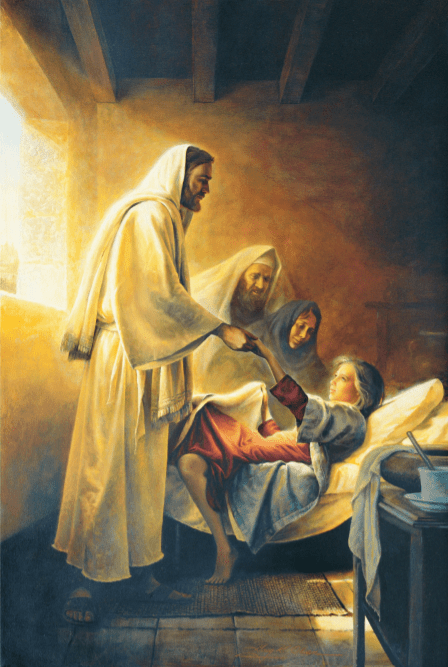
He healed a leper and warned him not to say a word. He raised a girl from the dead and charged her parents with silence. He commanded demons who recognized him to shut their mouths. He pulled his disciples aside and said: tell no one.
Why? That question is not simple. Sitting with it is worth some time.
The German theologian William Wrede first codified this pattern in 1901, naming what he saw in the Gospel of Mark as a deliberate motif — a king traveling incognito.
Scholars since have debated the mechanics. Was it political calculation? Was it theological design? Was it both?
The Catholic tradition holds something specific and beautiful: Jesus was not hiding his power. He was protecting the mission.
The crowd that witnessed a miracle wanted a king with a sword. The disciples who watched him walk on water still didn’t understand what they were seeing. If Jesus had performed miracle after miracle — an unrelenting spectacle of power — history would have given us a revolutionary. Rome would have crushed it in a season. And we would have gotten the wrong story entirely.
Jesus came to die. He knew it. He knew when. He knew how. That knowledge lives beneath every deliberate silence, every private healing, every command to “tell no one.”
This was not a man hiding from his destiny. This was a man who understood the timing of it with a precision no one around him could yet comprehend. The cross was not a failure of the mission. It was the mission. And anything that accelerated the wrong kind of attention would have bent the arc away from Calvary (where Christ was crucified) before it was time.
This is the part that stops me cold: he could have done more. He had the power. He chose restraint. Not out of fear, but out of a clarity about what this life was for.
What Jesus modeled in that restraint is a lesson we are still failing to learn two thousand years later.
We live in an age of spectacle, where noise equals significance. We confuse followers for impact. We measure our lives by the visible — and we miss the deeper invitation.
The prospect of death, helps us live better. It focuses the question: what is this life really for?
Jesus knew the answer. The afterlife was not an escape or a prize. It was the frame. It was the story that makes every earthly choice legible. When you know this is not the final chapter, you stop performing. You stop chasing power. You start asking: what does love require here, at this moment, with these people – before that time comes?
That is the alternative vision hiding inside the Messianic Secret. It is a story about a man who understood — completely, permanently, without flinching — that the way through was not the way around.
The power was that real. The restraint was a choice. And that choice was an act of love directed at every generation still searching for a reason to believe.
We are still the crowd wanting. We want a miracle-a-minute. We want proof at volume. We still search for ways to remove our doubts as if certainty could be forced.
What Jesus left us was not a proof. it was an invitation. Come and see. Not: watch and be convinced.
The Hidden King did not hide because He was afraid. He hid because He loved us enough to let the story finish as it had to.
That is still asking something of us.
 whatever because