KJS 4.26
I Track Fertilizer Prices to Watch Out for the Poor. This month, I’m Watching Wall Street Celebrate the War That’s Starving Them…
For the past year, I’ve held positions in fertilizer companies. It’s not a portfolio. It’s a lens. I track it the way a nurse tracks a vital sign. I’m not trying to get rich, fertilizer prices are one of the most honest indicators on earth of what is about to happen to the people who have the least.
I spent fifteen years in sub-Saharan Africa working on global health and finance. I helped scale funding to multi-billions annually. To avert death. To save lives. To improve livelihoods.
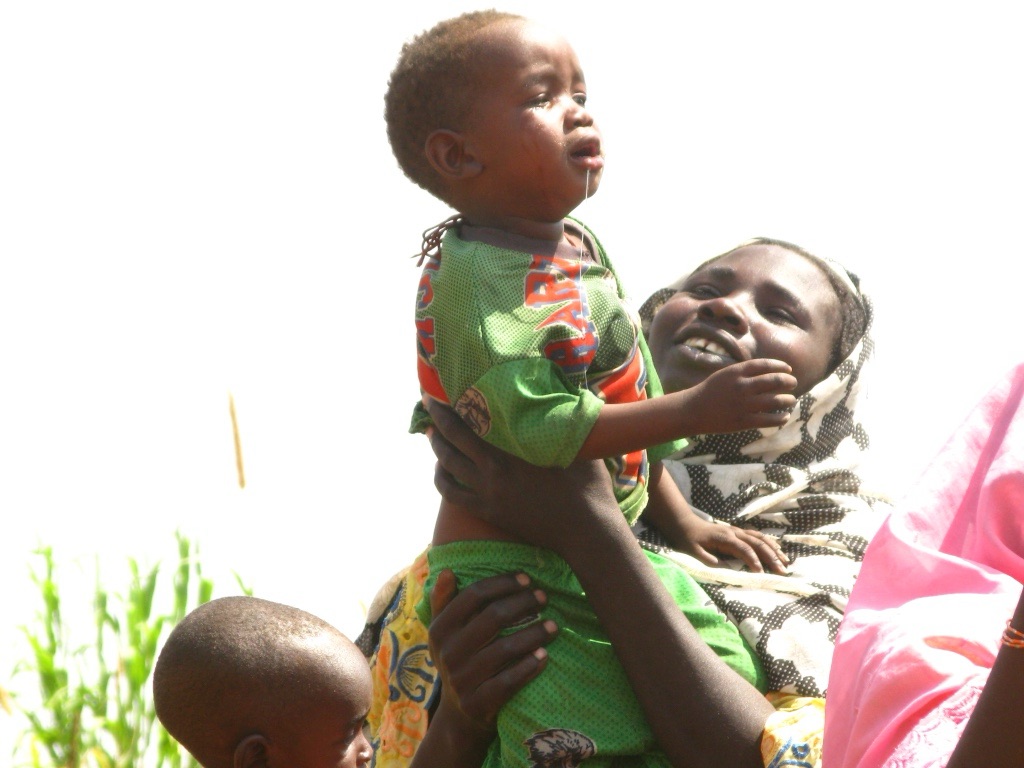
I know what happens when supply chains break in places where there is no buffer — no strategic reserve, no credit line, no social safety net standing between a price spike and a child going to bed hungry. I came home from that work with a specific kind of radar. When I see a commodity price move, I don’t see a trading opportunity first. I see a village.
Again this morning, a fragile ceasefire between the United States and Iran has done little to restore confidence in the Strait of Hormuz, where roughly one-third of globally traded fertilizers — and 20 to 30 percent of the world’s urea — normally transit. The market flinches on daily news. Peace-hope algorithms are selling the war premium. The underlying crisis hasn’t moved one inch.
The rich get richer, on the way up and down.
In the US Gulf, urea prices have nearly doubled since the start of the year, jumping from $350 per ton in late 2025 to over $800 per ton. Even if the Strait reopens soon, restarting production and transport for fertilizers and their components could take weeks — weeks that Northern Hemisphere farmers do not have.
Open Bloomberg and it’s another world.
JPMorgan’s traders posted their highest-ever quarterly revenue in the first three months of the year — $11.6 billion in trading revenue, up 20% from a year earlier. The five largest US banks are on course to report combined trading revenues of $40 billion for Q1 2026 — the highest on record going back to at least 2014 — built entirely on the volatility generated by the Iran war, the Hormuz closure, and ceasefire chaos. Citigroup logged its best quarterly returns in five years, with its equities desk hauling in a record $2.1 billion — a 39% increase — and the company’s highest quarterly trading haul since at least the financial crisis.
Hold both of these things at the same time…
Wall Street’s best quarter in a decade. The UN World Food Programme predicting an additional 45 million people could face acute hunger by the end of 2026 if the conflict continues into the middle of the year.
The same volatility. Two completely different experiences of it.
I’ve spent my career working for groups of people I call the Resilient Class — the ones at the bottom of the pyramid who absorb every shock the global economy produces, who have no hedge, no reserve, no algorithm working the spread on their behalf. They are not a rounding error in the macroeconomic data. They are the majority of the human beings on this planet.
The media is not ‘paid’ to talk about wealth disparity – I mean, they cover it, but…
“Unfortunately, the poorer countries in the world are quite often more exposed to these crises,” one analyst told CNBC. “Some of the African nations that import a lot of grains are going to be impacted.”
That’s the bought version of what I know from the real world: when fertilizer prices double, subsistence farmers in East Africa don’t reduce application by 20%. They eliminate it. And then the yield drops. And then the family doesn’t eat.
Here is what I think macroeconomics have been totally missing: the theory of change in capital markets has fundamentally shifted. For most of modern financial history, the incentive structure of major institutions was broadly aligned with growth — you made money when things went up, you lost money when they went down. The systems had a built-in pull toward stability and expansion. That alignment was imperfect, exploitative in many ways, but it at least created a shared floor. Volatility was the enemy of everyone.
That is no longer true.
In the same weeks that oil refineries across Germany were imposing 30% surcharges, European airlines were grounding thousands of flights, and the IEA was calling for the largest emergency oil reserve release in its history, the trading desks of America’s biggest banks were booking the most lucrative quarter they have collectively seen in at least a decade.
The crisis is the product. The volatility is the inventory. The poor are the externality that doesn’t appear on anyone’s balance sheet.
I’m not a critic of capitalism from the outside. I say it as someone who has spent a career trying to make capital work for the people it consistently bypasses — who tried to route impact investment into communities that traditional markets had written off as insufficiently profitable. I understand how the machine works – and doesn’t. I’ve operated inside it.
When the same event simultaneously produces the highest trading revenues in Wall Street history and the worst fertilizer supply shock in decades, you are witnessing a system that has become structurally indifferent to the outcome for the majority of its participants.
Not accidentally indifferent. Architecturally.
Because fertilizer has less value than oil and gas, political and business leaders expend fewer resources to make sure it keeps flowing. A ship captain bold enough to brave drone strikes would prefer to carry oil than fertilizer. G7 countries don’t maintain strategic fertilizer reserves to match their oil stockpiles.
The food supply of the world’s poorest people is the thing the system choses NOT to protect. That choice was made in advance, in the design of what gets strategic reserves and what doesn’t, what gets naval escorts and what doesn’t, whose supply chain counts as critical infrastructure and whose counts as an acceptable externality.
I track one of the few instruments available to what’s happening to the Resilient Class in real time. This week it dropped while banks posted their best quarter in history.
That spread — between those two numbers — is the actual equity gap made visible.
It’s been widening for fifteen years. This week it went vertical.
 whatever because